
Prehabilitation by definition is form of healthcare intervention that takes place before medical or surgical intervention with the aim to reduce complications or the need there of.
This is such a critical step often overlooked by horse owners, trainers, coaches and equestrians alike. We often only seek the help of an equine body worker when the horse is already “broken” when the level of care needed is one of rehabilitation. When a discomfort has turned into a lameness. But what if we can identify a problem in its infancy? Intervene before the horse “breaks” and before the only option left is months of rest, rehabilitation or retirement.
Pain
Pain is a general term that describes uncomfortable sensations in the body, it stems from an activation in the nervous system in an attempt to protect the body from physical harm. This can either be sensory or emotional. A physical stimuli or the perception of threat based on passed experience.
The involvement of the nervous system is an important concept. If we break it down to its most simple form the main purpose of the nervous system is to keep you alive. To distinguish what is safe and pleasurable, and what is painful and dangerous. Each experience wires the body to either want to avoid at all costs or to engage. When experiencing something painful the body goes into a state of flight or fight , if the sensation does not dissipate the nervous system puts the body into a state of freeze. This state of freeze is where the horse disengaged. Switched off and becomes robotic in performing what is asked.
Horses being prey animals are wired to hide pain from their herd as well as predators. This stoic nature, this whilst being an asset in the wild is detrimental in a domestic environment. it is the reason why we often only realize a horse is in pain when they physically cannot mask it anymore.
As an Equine Bodyworker I am trained to look for the subtleties, to pick up on the micro nuances that indicate either a level of pain or functional restrictions that can be easily overlooked when you not specifically looking.
Behavioral indication of pain
Any sudden change in behavior can be an indication of pain, horses are not inherently badly behaved or go out of their way to spite the rider. Whilst some horses do have behavioral issues and need to learn the appropriate response to the input provided. A horse that generally has a gentle willing temperament who starts showing resistant or dangerous behavior it trying to communicate that there is a problem. Something has changed.
These can be as subtle as gritting teeth, tension in the face and jaw, pinning ears, nipping, a hard eye, tense nostrils, a lack of willingness under saddle or Moving away when being tacked up.
When these subtle signs get overlooked they can develop into more dangerous behaviors like aggression, bucking, rearing or dismounting the rider.
If we don’t listen to their whispers they are eventually forced to scream.
Circling back to the nervous system and the emotional and physiological aspect of pain, horses who are in constant fight or flight mode will start becoming more easily startled, spook and bolt more because they are in a constant state of overwhelm.
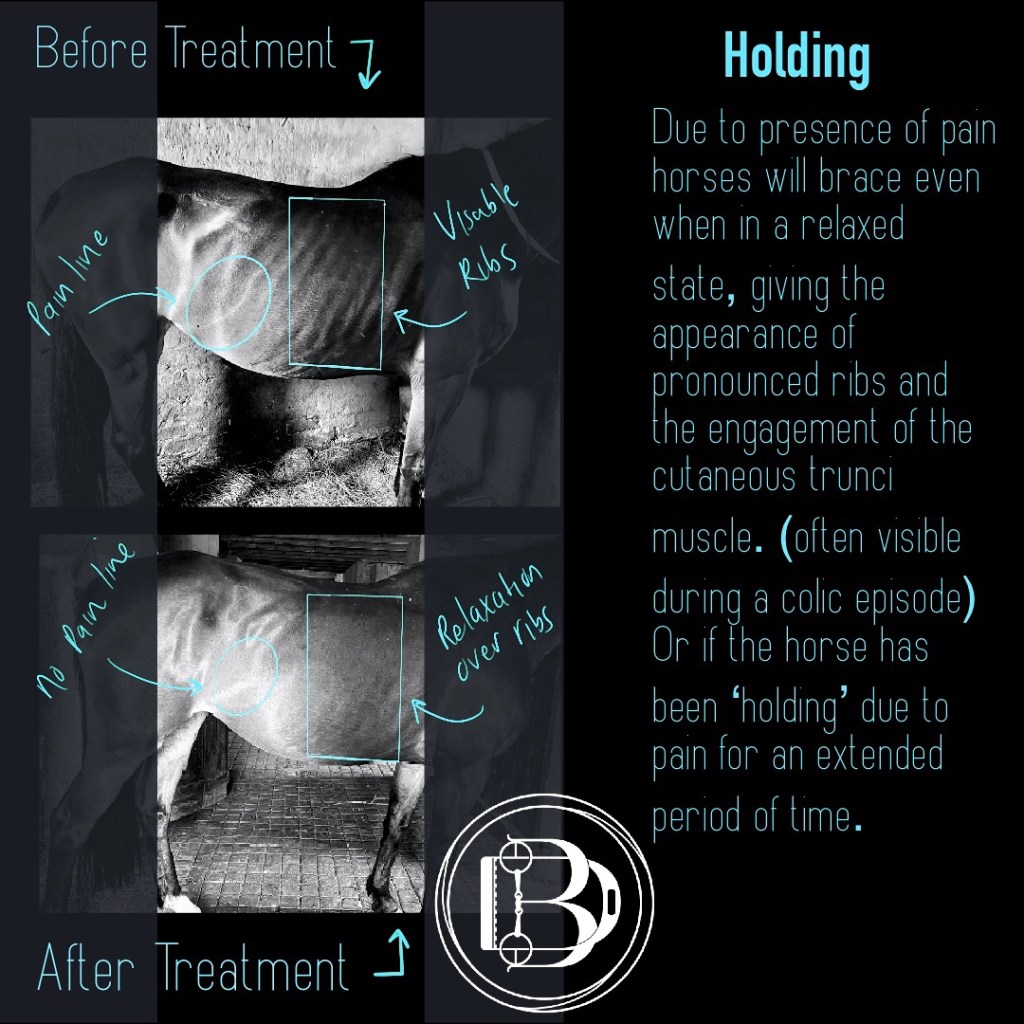
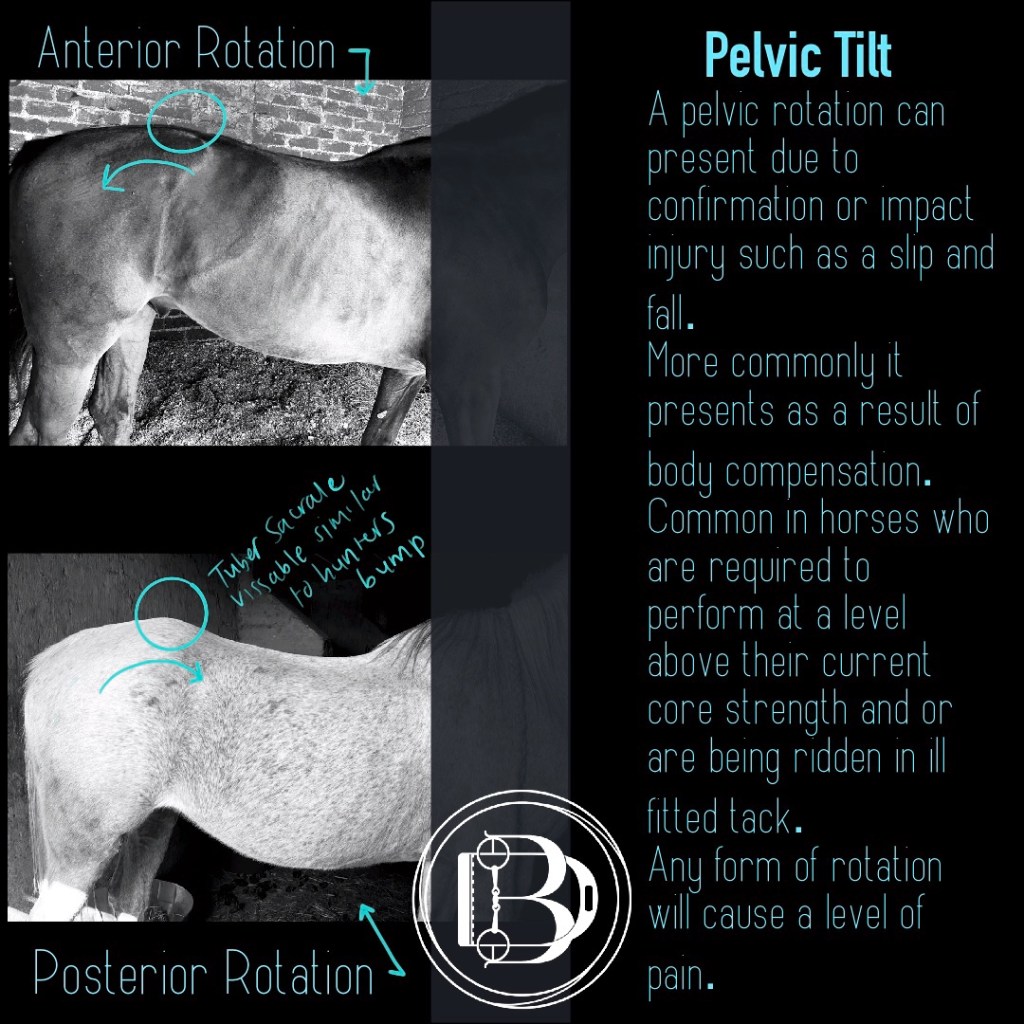
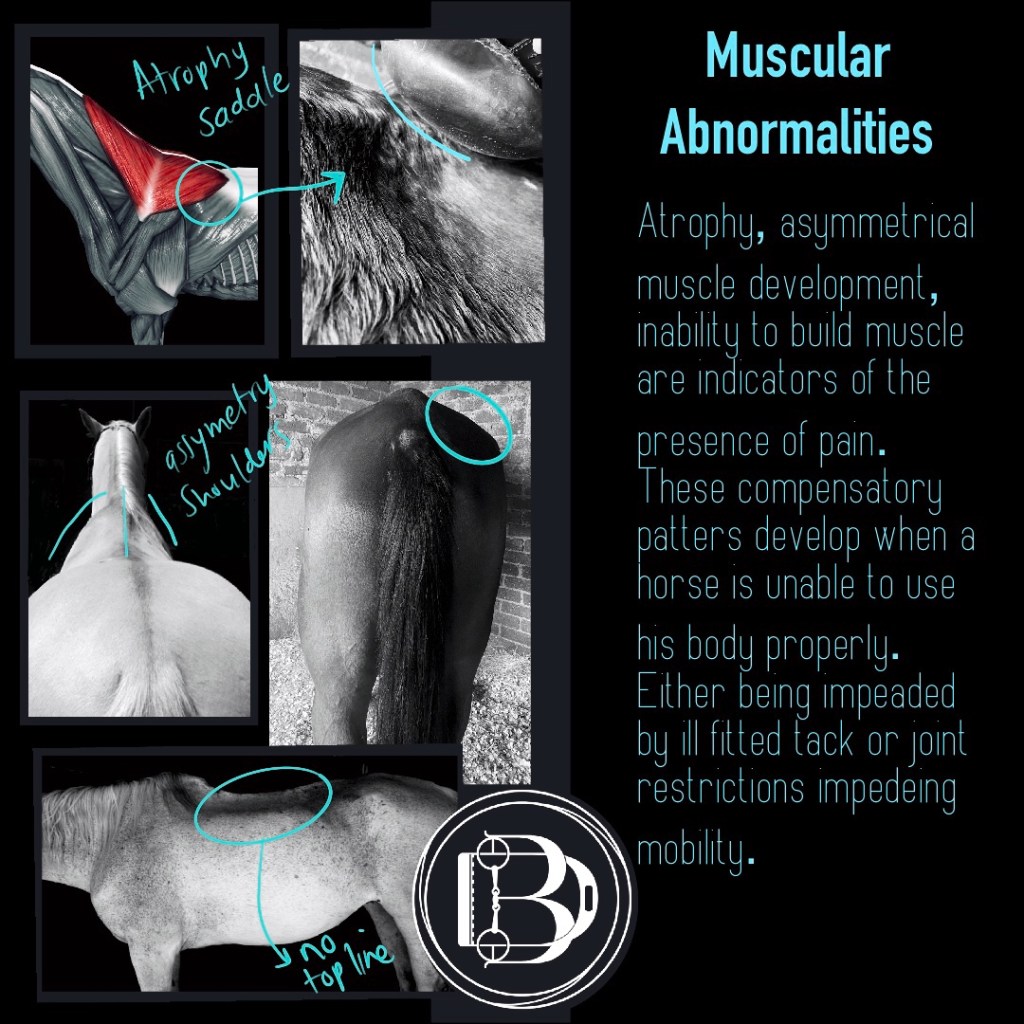
Physical Presentations indicating Pain
Where do you go from here?
Now that you have identified that your horse may be in pain it’s time to call in the cavalry.
The Dynamic Balance team offers a holistic approach to prehabilitating horses.
The first step is an assessment, looking at movement, assessing muscular and skeletal changes and pain response. Ruling out any issues with tack, saddle fit and bit fit. And then designing a treatment plan around the findings.
Often horses that are in pain and have been in pain for a long time will need more than one bodywork session. As well as a specific exercise program targeting problem areas.
Combining body work with a change in movement allow new neural pathways to be created, breaking the holding cycle both mentally and physically in a horse that has been stuck moving in a compensatory pattern.
 Creating Balance in Motion